
Securing your family’s financial future requires a proactive and strategic approach. Wealth management for families goes beyond simply investing; it encompasses comprehensive planning that considers estate preservation, risk mitigation, and the unique needs of each family member across generations. This guide delves into the multifaceted world of family wealth management, providing insights into effective strategies for building, protecting, and transferring wealth responsibly.
From crafting an estate plan that minimizes tax burdens to developing a diversified investment portfolio aligned with your family’s risk tolerance and long-term goals, we’ll explore the key elements of a robust family wealth management strategy. We’ll also examine the crucial role of communication and collaboration within the family, ensuring everyone understands and participates in the financial planning process.
Defining Family Wealth Management
Family wealth management goes beyond simply investing money; it’s a holistic approach to preserving, growing, and transferring family assets across generations. It considers the unique financial, legal, and emotional needs of each family member, ensuring the family’s wealth aligns with its values and long-term goals.Family wealth management encompasses a wide range of services, including financial planning, investment management, tax planning, estate planning, and philanthropy.
The core principle is to create a sustainable wealth plan that addresses the current and future needs of the entire family, fostering harmony and ensuring the legacy of the family endures.
Core Principles of Family Wealth Management
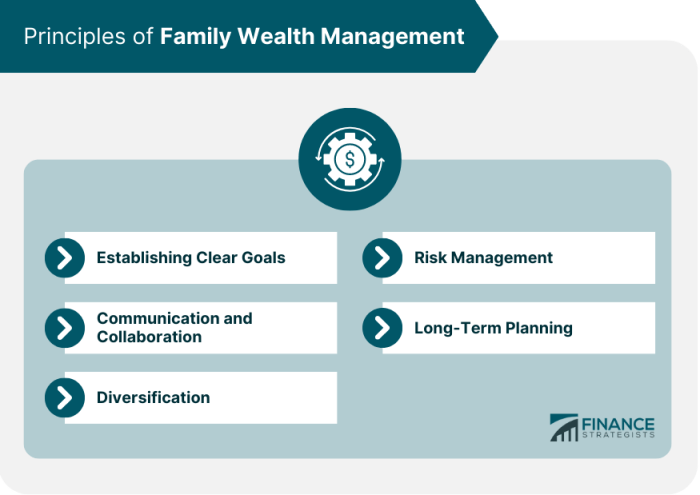
The core principles of family wealth management revolve around a long-term perspective, a comprehensive approach, and a strong emphasis on communication and collaboration. A successful strategy considers not just financial goals, but also the family’s values, risk tolerance, and future aspirations. This involves open communication among family members and a clear understanding of everyone’s roles and responsibilities in managing the family’s wealth.
Transparency and accountability are also crucial for maintaining trust and preventing conflict.
Differences Between Individual and Family Wealth Management Strategies
Individual wealth management focuses primarily on the financial goals and needs of a single person. Strategies are tailored to their specific circumstances, such as retirement planning, education savings, or charitable giving. Family wealth management, however, takes a broader view, considering the interconnected financial needs of multiple individuals across different generations. This requires a more complex approach that addresses issues such as estate planning, inheritance taxes, and family governance.
It necessitates a more comprehensive understanding of the family’s dynamics and relationships to ensure equitable distribution and minimize potential conflicts.
Examples of Various Family Structures and Their Unique Wealth Management Needs
Different family structures present unique challenges and opportunities in wealth management. A nuclear family (parents and children) may focus on education funding, retirement planning, and estate planning for their children. A blended family requires careful consideration of separate assets and potential inheritance issues. Multigenerational families living together might need strategies for shared expenses and asset management, while extended families with numerous branches may necessitate more complex estate planning and succession strategies to prevent disputes.
Families with special needs members will require specialized planning to ensure their long-term care and financial security.
Comparison of Wealth Management Approaches for Families
The optimal approach to wealth management varies significantly depending on family size and complexity. The table below illustrates this:
| Family Structure | Wealth Management Focus | Key Strategies | Potential Challenges |
|---|---|---|---|
| Nuclear Family (2 adults, 2 children) | Education funding, retirement planning, basic estate planning | 529 plans, retirement accounts (401k, IRA), wills | Balancing individual needs with family goals |
| Blended Family (2 adults, children from previous relationships) | Estate planning, asset protection, equitable distribution | Prenuptial agreements, trusts, clear inheritance plans | Step-child inheritance, potential family conflicts |
| Multigenerational Family (3+ generations) | Long-term wealth preservation, family governance, intergenerational transfers | Family trusts, family councils, charitable giving strategies | Communication, differing risk tolerances, succession planning |
| High-Net-Worth Family (Significant Assets) | Tax optimization, sophisticated investment strategies, philanthropy | Private wealth management, family offices, charitable foundations | Complex tax laws, asset protection, maintaining family unity |
Estate Planning and Inheritance
Effective estate planning is paramount in family wealth management, ensuring the smooth transfer of assets to future generations while minimizing tax burdens and potential family conflicts. A well-structured plan protects your family’s financial future and legacy, providing clarity and control over the distribution of your wealth. Failing to plan can lead to unintended consequences, including costly legal battles, inefficient asset distribution, and significant tax liabilities.Estate planning encompasses a range of strategies designed to manage and distribute assets after death.
It’s not merely about avoiding taxes; it’s about aligning your wishes with the legal framework to safeguard your family’s financial well-being and fulfill your legacy goals. This involves careful consideration of various legal instruments and tax implications to achieve a tailored solution.
Trusts and Wills
Wills are fundamental legal documents outlining how an individual’s assets will be distributed after their death. They dictate who inherits what and name an executor to manage the estate. However, wills are subject to probate, a court process that can be time-consuming and expensive. Trusts, on the other hand, are legal entities that hold assets separately from the grantor’s estate, often offering greater control over asset distribution and avoiding probate.
Different types of trusts, such as revocable and irrevocable trusts, offer varying degrees of flexibility and tax advantages. For example, a revocable living trust allows the grantor to maintain control over assets during their lifetime and amend the trust as needed, while an irrevocable trust provides asset protection and potential tax benefits but relinquishes control to the trustee.
Estate Tax Implications
Estate taxes are levied on the value of an individual’s assets at the time of death. The amount of tax owed depends on the size of the estate and applicable tax laws, which vary by jurisdiction. For instance, in the United States, the federal estate tax exemption is quite high, meaning only estates exceeding a certain threshold are subject to tax.
However, state estate taxes may apply separately, potentially adding to the overall tax burden. High-net-worth families need to proactively plan to mitigate these taxes, utilizing strategies like gifting, charitable contributions, and the establishment of trusts to reduce the taxable estate value. Failing to do so could result in a substantial portion of the family’s wealth being depleted to pay estate taxes, leaving less for heirs.
Hypothetical Estate Plan for a High-Net-Worth Family
Consider the Smith family, with a substantial portfolio including real estate, investments, and a thriving business. To minimize tax liabilities and ensure a smooth wealth transfer, they could implement a comprehensive estate plan incorporating several strategies. This might involve establishing a family limited partnership (FLP) to manage the business and transfer ownership gradually to the next generation, minimizing gift and estate taxes.
Additionally, they could create an irrevocable life insurance trust (ILIT) to own and manage life insurance policies, shielding the death benefit from estate taxes. Furthermore, a charitable remainder trust (CRT) could be established to provide income for the family while making tax-deductible charitable contributions, further reducing the taxable estate. Finally, a combination of revocable and irrevocable trusts could be used to distribute assets strategically to heirs, taking into account individual needs and circumstances.
This layered approach would allow the Smiths to minimize their tax liability while maintaining control over asset distribution and protecting their family’s wealth for future generations.
Investment Strategies for Families
Developing a sound investment strategy is crucial for families seeking to build and preserve wealth across generations. The optimal approach varies significantly depending on individual circumstances, financial goals, and risk tolerance. Understanding these factors allows for the creation of a personalized plan designed to maximize long-term growth while mitigating potential losses.
Investment Strategies Based on Risk Tolerance
Families exhibit diverse risk tolerances, influencing their investment choices. Conservative investors prioritize capital preservation and stability, opting for lower-return, lower-risk investments. Moderate investors balance risk and return, seeking a blend of stability and growth potential. Aggressive investors are comfortable with higher risk for potentially greater returns. These differing approaches lead to vastly different portfolio compositions.
For example, a conservative family might focus heavily on government bonds and high-yield savings accounts, while an aggressive family might allocate a significant portion of their portfolio to equities and alternative investments.
Long-Term Investment Vehicles for Family Wealth Growth
Several investment vehicles are well-suited for long-term family wealth growth. Equities (stocks) offer the potential for significant capital appreciation over time, although they carry inherent market risk. Real estate can provide both income generation (through rental properties) and capital appreciation. Fixed-income investments, such as bonds, offer a more stable income stream with lower risk than equities. Diversification across these asset classes is key to mitigating risk and maximizing returns.
For instance, a family might invest in a mix of blue-chip stocks, real estate investment trusts (REITs), and government bonds to achieve a balanced portfolio.
Diversification Strategies for Family Investment Portfolios
Diversification is a cornerstone of effective long-term investment. It involves spreading investments across different asset classes, sectors, and geographies to reduce the impact of any single investment’s underperformance. For example, a family might diversify their equity holdings by investing in both domestic and international stocks, across various industry sectors. They might also allocate a portion of their portfolio to alternative investments, such as private equity or commodities, to further reduce risk and enhance potential returns.
This approach ensures that if one investment performs poorly, others might offset those losses.
Sample Family Investment Portfolio
The following is an example of a diversified family investment portfolio, illustrating different asset classes and their allocations. This is a sample and should be adjusted based on individual circumstances and risk tolerance. It is crucial to consult with a qualified financial advisor before making any investment decisions.
- Equities (Stocks): 40%
-This includes a mix of large-cap, mid-cap, and small-cap stocks, both domestic and international, to provide diversification across market capitalization and geographic regions. - Fixed Income (Bonds): 30%
– This portion comprises a mix of government bonds, corporate bonds, and potentially some high-yield bonds for higher potential returns, but with increased risk. - Real Estate: 15%
-This could include direct ownership of properties or investment in REITs. This allocation provides diversification and potential for rental income. - Alternative Investments: 10%
– This could include private equity, commodities, or other alternative assets to further diversify the portfolio and potentially enhance returns. - Cash and Cash Equivalents: 5%
– This serves as a buffer for unexpected expenses and provides liquidity.
Family Governance and Communication
Effective communication and a well-defined governance structure are crucial for successful family wealth management. These elements foster transparency, prevent conflict, and ensure the long-term preservation and growth of family assets across generations. Without a proactive approach to family governance and communication, wealth can become a source of division rather than unity.
Strategies for Effective Family Communication Regarding Wealth Management
Open and honest communication is paramount. Regular family meetings, facilitated by a neutral third party such as a financial advisor or family therapist, can provide a structured environment for discussing financial matters. These meetings should establish clear agendas, allowing for focused discussions on specific topics such as investment performance, estate planning updates, and charitable giving strategies. Utilizing a variety of communication methods – formal meetings, informal gatherings, individual check-ins – caters to different communication styles and preferences within the family.
Establishing ground rules for respectful dialogue and active listening is essential for productive conversations. Transparency regarding the family’s financial situation, including assets, liabilities, and investment strategies, builds trust and encourages collaborative decision-making. Finally, documenting key decisions and agreements in writing helps avoid misunderstandings and provides a clear record for future reference.
The Importance of Establishing Clear Family Governance Structures
A formal family governance structure provides a framework for making decisions related to family wealth. This structure might include a family council, a family constitution, or a combination of both. A family council typically consists of key family members who meet regularly to discuss financial matters and make strategic decisions. A family constitution Artikels the family’s values, goals, and rules regarding wealth management, providing a clear guide for future generations.
These structures clarify roles and responsibilities, preventing confusion and potential conflict. They also provide a mechanism for resolving disputes and ensuring that decisions are made in a fair and equitable manner. A well-defined governance structure helps maintain family unity and protects the family’s legacy. For example, a family constitution might specify how family assets will be distributed, how disputes will be resolved, and what criteria will be used to select future family council members.
Benefits of Engaging Family Members in the Wealth Management Process
Engaging family members in the wealth management process fosters a sense of ownership and responsibility. Early involvement educates younger generations about financial literacy, investment strategies, and the importance of responsible wealth management. This collaborative approach promotes a shared understanding of the family’s financial goals and values, reducing the likelihood of future conflict. Furthermore, diverse perspectives and expertise within the family can contribute to more informed and effective decision-making.
By actively involving family members, wealth becomes a unifying force, strengthening family bonds and fostering a sense of shared purpose. This can lead to increased family harmony and a more successful long-term wealth management strategy. For instance, involving younger generations in philanthropic endeavors can instill values of social responsibility and build their understanding of the family’s commitment to giving back to the community.
Framework for Facilitating Open and Honest Conversations About Family Finances
A structured approach to family financial discussions is crucial. This framework should begin with defining the purpose and objectives of the conversation. Next, establishing a comfortable and neutral setting is vital, ensuring all members feel safe and respected. A facilitator, ideally an external professional, can help guide the conversation and ensure that all voices are heard. The use of visual aids, such as charts and graphs, can aid understanding and make complex financial information more accessible.
It’s important to start with simpler topics before moving to more complex issues, building trust and understanding gradually. Regular check-ins and follow-up meetings are vital for maintaining open communication and addressing any emerging concerns. This structured approach helps to avoid emotionally charged arguments and facilitates a more productive and collaborative discussion. For example, a family might start by discussing their shared values regarding philanthropy before moving on to more complex issues such as estate planning.
Wealth Management Professionals and Services
Navigating the complexities of family wealth requires expert guidance. Different professionals offer specialized services, each crucial for comprehensive wealth management. Understanding their roles and choosing the right team is paramount to achieving your family’s financial goals. This section clarifies the services offered by various professionals and highlights the importance of careful selection.
The landscape of wealth management encompasses a range of professionals, each with distinct expertise. Financial advisors provide broad financial planning, encompassing investment management, retirement planning, and risk management. Estate planners focus on preserving and transferring wealth across generations, encompassing wills, trusts, and tax minimization strategies. Tax attorneys specialize in tax law, offering advice on minimizing tax liabilities and ensuring compliance.
A coordinated approach, often involving a team of these specialists, usually yields the best results.
Services Offered by Different Wealth Management Professionals
Financial advisors offer a wide array of services, including investment portfolio management tailored to risk tolerance and financial goals, retirement planning encompassing strategies for accumulating and distributing retirement assets, and financial education to empower families to make informed decisions. Estate planners concentrate on estate planning documents such as wills and trusts, designed to minimize estate taxes and ensure the smooth transfer of assets according to the family’s wishes.
They also advise on probate avoidance and charitable giving strategies. Tax attorneys provide specialized advice on tax implications of various financial decisions, helping to minimize tax burdens through legal and compliant strategies. They also assist in navigating complex tax regulations and representing clients in tax audits.
Characteristics of a Reputable Wealth Management Firm
A reputable wealth management firm demonstrates transparency in its fees and investment strategies. They possess a strong track record of performance and a commitment to fiduciary duty, prioritizing the client’s best interests above their own. The firm should hold appropriate licenses and certifications, adhere to strict ethical standards, and have a well-defined process for managing conflicts of interest.
A commitment to ongoing education and professional development among its staff further strengthens the firm’s credibility. Lastly, a strong client-advisor relationship, built on trust and open communication, is a hallmark of a reputable firm.
Importance of Due Diligence When Selecting a Wealth Management Professional
Thorough due diligence is critical to ensuring the selected professional is the right fit for the family’s needs and values. This involves verifying credentials, reviewing performance records, and assessing the firm’s overall reputation. Checking for any disciplinary actions or regulatory violations is also essential. Understanding the firm’s investment philosophy and fee structure is crucial to aligning their approach with the family’s financial objectives.
Ignoring this process can lead to costly mistakes and compromised financial well-being.
Questions Families Should Ask Potential Wealth Management Professionals
Before engaging a wealth management professional, families should thoroughly investigate their background and approach. Asking the right questions is vital in ensuring a suitable match.
- What are your credentials and experience in managing wealth for families similar to ours?
- What is your investment philosophy and how does it align with our risk tolerance and financial goals?
- What are your fees and how are they structured?
- What is your process for managing conflicts of interest?
- Can you provide references from other families you have served?
- How do you communicate with clients and how often can we expect updates?
- What is your succession plan, ensuring continuity of service?
- How do you incorporate tax planning into your wealth management strategies?
- What is your approach to estate planning and how do you integrate it with our investment strategy?
- How do you measure and report your performance?
Successfully navigating the complexities of family wealth management requires a holistic approach, encompassing careful planning, proactive risk management, and open family communication. By understanding the core principles of estate planning, investment strategies, and risk mitigation, families can build a secure financial foundation for generations to come. Remember, seeking professional guidance from qualified advisors is crucial in tailoring a plan that meets your unique circumstances and aspirations.
Q&A
What is the difference between a will and a trust?
A will dictates how your assets will be distributed after your death. A trust is a legal entity that holds and manages assets for beneficiaries, often offering more control and flexibility than a will, particularly regarding tax implications and asset protection.
How often should I review my family’s financial plan?
It’s recommended to review your financial plan annually, or more frequently if there are significant life changes (marriage, birth, death, job change, etc.).
What is the role of a financial advisor in family wealth management?
A financial advisor provides personalized guidance on investment strategies, risk management, tax planning, and estate planning, helping families achieve their financial goals.
How can I teach my children about financial responsibility?
Start early by teaching basic concepts like saving and spending. Involve them in age-appropriate financial discussions and consider setting up a savings account for them.


