
What is wealth management? It’s more than just investing; it’s a holistic approach to securing your financial future. It encompasses a wide range of services designed to help individuals and families grow, protect, and preserve their assets. From meticulous financial planning to sophisticated investment strategies and proactive risk management, wealth management tailors solutions to individual circumstances, goals, and risk tolerance.
This guide delves into the intricacies of this crucial aspect of financial well-being, providing a clear understanding of its core principles and practical applications.
Understanding wealth management involves recognizing the diverse elements that contribute to long-term financial health. This includes not only investment strategies, but also crucial areas such as tax planning, estate planning, risk mitigation, and charitable giving. A successful wealth management plan considers the client’s unique life circumstances, financial goals, and risk appetite to create a personalized roadmap towards achieving financial security and prosperity.
Defining Wealth Management
Wealth management is essentially a holistic approach to managing your financial life, going beyond simply investing your money. It involves a comprehensive strategy to help you achieve your financial goals, considering all aspects of your financial well-being. This includes not just growing your wealth, but also protecting it, preserving it, and strategically using it to meet your current and future needs.Wealth management takes a long-term perspective, considering your entire financial picture, including investments, retirement planning, tax strategies, estate planning, and philanthropy.
The aim is to create a customized plan that aligns with your individual circumstances, risk tolerance, and aspirations.
A Concise Definition of Wealth Management
Wealth management is the integrated process of planning, implementing, and monitoring financial strategies designed to maximize a client’s wealth accumulation, preservation, and distribution, while aligning with their personal goals and risk tolerance. Key objectives include wealth growth, risk mitigation, tax optimization, and legacy planning.
Examples of Wealth Management Services
Different wealth management firms offer a range of services tailored to diverse client needs and financial situations. For instance, a high-net-worth individual might utilize sophisticated investment strategies involving private equity or hedge funds, alongside complex tax planning and estate structuring. Conversely, a younger client might focus on retirement planning, debt management, and building an emergency fund through simpler investment vehicles like mutual funds or index funds.
Below are a few examples:
- Financial Planning: This foundational service encompasses budgeting, debt management, retirement planning, and education planning. It’s crucial for individuals at all wealth levels.
- Investment Management: This involves selecting and managing investments across various asset classes (stocks, bonds, real estate, etc.) to achieve specific financial goals. Sophisticated strategies may include portfolio diversification, risk management, and performance monitoring.
- Tax Planning: This crucial aspect helps clients minimize their tax liabilities through legal and ethical strategies, including tax-efficient investing and estate planning.
- Estate Planning: This involves creating a plan to manage and distribute assets after death, considering wills, trusts, and other legal instruments to minimize estate taxes and ensure the smooth transfer of wealth to heirs.
- Philanthropic Planning: For high-net-worth individuals, this service assists in establishing charitable foundations or making strategic donations to align with their philanthropic goals.
Investment Strategies in Wealth Management
Wealth management firms employ a variety of investment strategies tailored to individual client needs and risk profiles. These strategies aim to maximize returns while mitigating risk, and are carefully constructed considering factors like time horizon, financial goals, and personal circumstances. The strategies are broadly categorized based on risk tolerance, allowing clients to choose an approach that aligns with their comfort level.
Investment strategies are not static; they are regularly reviewed and adjusted based on market conditions and the client’s evolving financial situation. A key element of successful wealth management is the ongoing dialogue between the client and the wealth manager, ensuring the investment strategy remains relevant and effective.
Investment Strategies by Risk Tolerance
Wealth managers typically classify investment strategies based on risk tolerance into three main categories: conservative, moderate, and aggressive. Conservative strategies prioritize capital preservation and minimize risk, often focusing on low-volatility investments. Moderate strategies seek a balance between risk and return, incorporating a mix of conservative and growth-oriented assets. Aggressive strategies aim for higher returns, accepting a greater degree of risk.
The allocation of assets within each category will vary depending on the individual client’s circumstances and goals.
Conservative Investment Strategies
Conservative strategies emphasize capital preservation and stability. A typical portfolio might consist primarily of high-quality bonds, government securities, and money market instruments. These investments offer lower returns but significantly reduced risk compared to stocks or other higher-risk assets. A portion of the portfolio may also include dividend-paying blue-chip stocks, providing a steady stream of income while maintaining a relatively low risk profile.
For example, a conservative investor might allocate 80% of their portfolio to bonds and 20% to dividend-paying stocks.
Moderate Investment Strategies
Moderate strategies aim for a balance between risk and return. These portfolios typically include a mix of stocks and bonds, with the proportion of each asset class varying based on the investor’s risk tolerance and time horizon. A typical moderate portfolio might allocate 50% to stocks (a mix of large-cap, mid-cap, and small-cap companies) and 50% to bonds (a mix of government and corporate bonds).
This balance allows for potential growth while mitigating the risk associated with a purely stock-heavy portfolio. Real estate investment trusts (REITs) might also be included, offering diversification and potential income generation.
Aggressive Investment Strategies
Aggressive strategies prioritize growth and are suitable for investors with a higher risk tolerance and longer time horizon. These portfolios typically have a significantly higher allocation to stocks, including potentially more volatile growth stocks and emerging market equities. Alternative investments, such as private equity, hedge funds, or commodities, may also be considered. A highly aggressive portfolio might allocate 70% or more to stocks, with the remainder invested in alternative assets.
This approach carries a greater risk of loss but also offers the potential for higher returns over the long term. It is crucial to remember that past performance is not indicative of future results.
Investment Vehicles Comparison
Stocks, bonds, real estate, and alternative investments represent different asset classes, each with its own risk and return characteristics. Stocks offer the potential for high returns but also carry significant volatility. Bonds generally offer lower returns but are considered less risky than stocks. Real estate can provide both income and appreciation, but liquidity can be limited. Alternative investments, such as private equity and hedge funds, often have high minimum investment requirements and may be illiquid.
| Investment Vehicle | Risk | Return Potential | Liquidity |
|---|---|---|---|
| Stocks | High | High | High |
| Bonds | Low to Moderate | Low to Moderate | High |
| Real Estate | Moderate to High | Moderate to High | Low |
| Alternative Investments | High | High | Low |
The Importance of Diversification
Diversification is a fundamental principle of successful investing. By spreading investments across different asset classes, sectors, and geographies, investors can reduce the overall risk of their portfolio. If one investment performs poorly, the losses can be offset by the gains in other parts of the portfolio. Diversification does not eliminate risk entirely, but it significantly reduces the impact of any single investment’s underperformance.
For example, a diversified portfolio might include a mix of U.S. and international stocks, government and corporate bonds, and real estate. This approach helps to mitigate risk and potentially enhance returns over the long term. It’s crucial to remember that diversification should be tailored to the individual investor’s risk profile and financial goals.
Risk Management and Wealth Preservation
Protecting accumulated wealth is a crucial aspect of wealth management, going beyond simply accumulating assets. High-net-worth individuals face a unique set of financial risks that require sophisticated strategies to mitigate and preserve their wealth for themselves and future generations. Effective risk management isn’t about avoiding all risk; it’s about intelligently identifying, assessing, and mitigating those risks that could significantly impact long-term financial goals.High-net-worth individuals face a complex interplay of financial risks.
These risks can be broadly categorized, but often overlap and interact. Understanding these risks is the first step towards effective risk management.
Common Financial Risks Faced by High-Net-Worth Individuals
High-net-worth individuals (HNWIs) often face a broader range of financial risks than the average person. These risks stem from the size and complexity of their portfolios, their unique circumstances, and their higher exposure to market fluctuations. For instance, market volatility poses a significant threat to investment portfolios, while inflation can erode the purchasing power of accumulated wealth. Furthermore, legal and regulatory changes, geopolitical instability, and even personal risks like health issues and family disputes can significantly impact their financial well-being.
Sophisticated risk management strategies are crucial to navigate this complex landscape.
Risk Management Strategies for Different Client Profiles
A successful risk management strategy is highly personalized and depends on individual circumstances. Consider two contrasting client profiles: a young professional and a retiree.A young professional, typically with a longer time horizon, might tolerate higher levels of risk in their investment portfolio to pursue potentially higher returns. Their risk management strategy could focus on diversification across various asset classes, including stocks, bonds, and real estate, with a greater emphasis on growth-oriented investments.
Regular portfolio rebalancing to maintain the desired asset allocation would be crucial. Insurance, particularly disability and life insurance, would also be a key component to protect against unforeseen events that could disrupt their wealth accumulation journey. For example, a young professional might allocate 70% of their investment portfolio to equities and 30% to fixed-income securities, accepting higher volatility in exchange for the potential for higher long-term growth.Conversely, a retiree’s risk tolerance is typically lower, prioritizing capital preservation and income generation.
Their risk management strategy would focus on minimizing volatility and ensuring a steady stream of income to meet their living expenses. A greater allocation to fixed-income securities, annuities, and low-risk investments would be appropriate. They might also consider hedging strategies to protect against inflation and market downturns. For example, a retiree might allocate 80% of their portfolio to fixed-income securities and 20% to low-risk equities, prioritizing income and capital preservation over aggressive growth.
Wealth Preservation Techniques
Wealth preservation involves proactive strategies to protect accumulated assets from various risks, ensuring the long-term financial security of the individual and their heirs. Estate planning and tax optimization are two cornerstone techniques.Estate planning involves the creation of a comprehensive plan to manage the distribution of assets after death. This includes drafting a will, establishing trusts, and designating beneficiaries. Effective estate planning minimizes estate taxes, ensures assets are distributed according to the individual’s wishes, and mitigates potential family disputes.
For example, a trust can be used to manage assets for minor children, ensuring their financial security while they are still underage.Tax optimization strategies aim to minimize tax liabilities while remaining compliant with all applicable laws. This can involve various techniques, such as utilizing tax-advantaged accounts (like 401(k)s and IRAs), charitable giving, and strategic asset allocation to minimize capital gains taxes.
For instance, strategic tax-loss harvesting can offset capital gains, reducing the overall tax burden. Proper tax planning can significantly increase the amount of wealth passed on to future generations.
The Role of a Wealth Manager
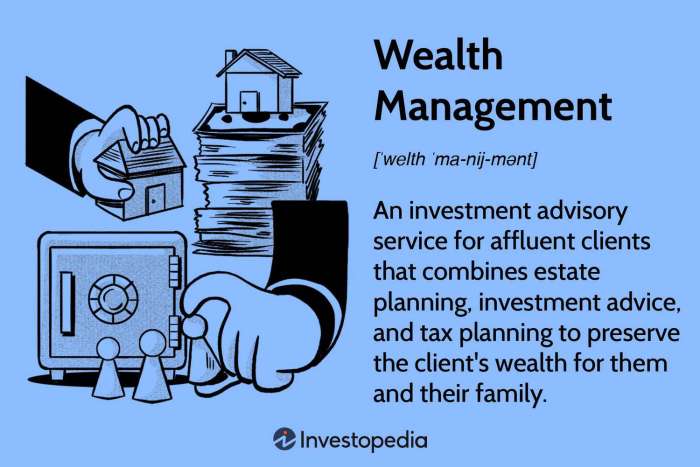
Wealth managers act as a central point of contact for high-net-worth individuals and families, guiding them through the complexities of financial planning and wealth preservation. They go beyond simply offering investment advice; they take a holistic approach, considering all aspects of a client’s financial life to create a personalized strategy designed to achieve their long-term goals. This involves a deep understanding of various financial instruments, market trends, and tax implications.A qualified wealth manager possesses a comprehensive skill set encompassing financial planning, investment management, tax optimization, and estate planning.
They are adept at analyzing a client’s current financial situation, identifying their goals, and developing a tailored plan to achieve those goals while mitigating potential risks. This necessitates a high level of financial acumen, coupled with strong analytical and communication skills to effectively convey complex information to clients.
Wealth Management Professionals
A successful wealth management team often comprises a diverse group of specialists, each contributing their unique expertise to the overall strategy. This collaborative approach ensures a comprehensive and well-rounded approach to wealth management.
- Financial Advisors: These professionals provide guidance on investment strategies, asset allocation, and portfolio management, tailoring recommendations to a client’s risk tolerance and financial goals. They regularly monitor market conditions and adjust portfolios accordingly.
- Estate Planners: Estate planners specialize in helping clients prepare for the eventual transfer of their assets. This includes creating wills, trusts, and other legal documents to ensure their wishes are carried out and minimize estate taxes. They work closely with tax attorneys and other legal professionals.
- Tax Attorneys: Tax attorneys are crucial in minimizing tax liabilities through strategic planning and compliance. They advise on tax-efficient investment strategies, estate planning, and other tax-related matters, ensuring clients remain compliant with all relevant tax laws.
- Certified Public Accountants (CPAs): CPAs play a vital role in preparing tax returns, providing financial statement analysis, and offering advice on tax optimization strategies. Their expertise is particularly valuable in navigating complex tax regulations.
The Wealth Management Process
The process a wealth manager employs to work with a client is typically a multi-stage approach focused on collaboration and transparency.
- Understanding the Client’s Needs and Goals: This initial phase involves in-depth discussions to understand the client’s financial situation, risk tolerance, short-term and long-term goals (retirement, education funding, philanthropy, etc.), and overall financial philosophy. This often includes a detailed review of existing assets, liabilities, and income streams.
- Developing a Financial Plan: Based on the information gathered, the wealth manager develops a comprehensive financial plan. This plan Artikels specific strategies to achieve the client’s goals, considering factors such as investment allocation, tax planning, estate planning, and risk management.
- Implementing the Plan: The wealth manager and their team put the plan into action. This may involve opening new accounts, investing in specific assets, setting up trusts, or making other necessary arrangements.
- Monitoring and Review: The wealth manager continuously monitors the client’s portfolio and the overall financial plan’s performance. Regular reviews are scheduled to assess progress, adjust the strategy as needed (based on market changes or client life events), and ensure the plan remains aligned with the client’s evolving goals.
- Ongoing Communication and Adjustments: Open and consistent communication is crucial throughout the process. The wealth manager keeps the client informed of market conditions, portfolio performance, and any necessary adjustments to the plan. This ongoing dialogue ensures the client remains engaged and confident in the management of their wealth.
Ethical Considerations in Wealth Management
The ethical landscape of wealth management is paramount, shaping the trust and integrity of the entire industry. Wealth managers operate under a significant responsibility, requiring a deep understanding and adherence to ethical principles to ensure clients’ best interests are always prioritized. This involves navigating complex situations and making decisions that balance financial goals with moral obligations.Ethical Obligations and Fiduciary Duties of Wealth ManagersWealth managers are bound by strict fiduciary duties, meaning they must act in the best interests of their clients, placing their clients’ needs above their own.
This encompasses several key aspects, including loyalty, prudence, and reasonable care. Loyalty demands unwavering commitment to the client’s objectives, while prudence requires careful consideration of investment risks and potential outcomes. Reasonable care implies a diligent approach to research, analysis, and decision-making, always acting with the level of expertise expected from a professional in the field. Breaches of these duties can lead to significant legal and reputational consequences.
Transparency and Conflict-of-Interest Avoidance
Transparency is fundamental to building and maintaining trust between wealth managers and their clients. Open communication about fees, investment strategies, and potential risks is essential. Clients have a right to understand how their wealth is being managed and to ask questions without hesitation. Furthermore, wealth managers must proactively identify and avoid conflicts of interest. This might involve declining clients whose interests clash with their own or those of other clients, or disclosing any potential conflicts to clients and obtaining their informed consent before proceeding.
For example, a wealth manager should not recommend an investment product simply because they receive a higher commission, but rather because it aligns with the client’s specific financial goals and risk tolerance. Transparency and conflict avoidance measures are crucial for maintaining the integrity of the industry and fostering long-term client relationships.
Potential Ethical Dilemmas and Proposed Solutions
Wealth managers often encounter ethical dilemmas that require careful consideration and ethical decision-making. One example is the pressure to prioritize short-term gains over long-term stability, especially when facing client pressure for immediate returns. A solution would be to implement a comprehensive financial plan that clearly articulates the client’s long-term goals and risk tolerance, thereby providing a framework for decision-making that prioritizes long-term success.
Another dilemma might involve a situation where a client requests an investment that the wealth manager believes is inappropriate given the client’s risk profile. The solution in this scenario would be to clearly communicate the potential risks to the client and suggest alternative investments that better align with their risk tolerance. A further challenge might arise if a client’s instructions conflict with the wealth manager’s ethical obligations, such as requesting investments that are unethical or illegal.
In such instances, the wealth manager must refuse the client’s instructions and potentially terminate the relationship, prioritizing ethical conduct above financial gain. These situations highlight the importance of robust ethical frameworks and compliance programs within wealth management firms.
Technological Advancements in Wealth Management
Technology is rapidly reshaping the wealth management landscape, impacting every aspect from client acquisition to portfolio management and risk mitigation. The industry is embracing digital transformation to enhance efficiency, improve client experiences, and offer more personalized and accessible services. This shift is driven by increasing client expectations for seamless digital interactions and the emergence of innovative fintech solutions.The integration of technology is streamlining operations, reducing costs, and enabling wealth managers to provide more sophisticated services to a wider range of clients.
This includes both high-net-worth individuals and those with more modest portfolios who previously lacked access to professional wealth management.
Technological Tools and Platforms
The wealth management industry utilizes a diverse range of technological tools and platforms to enhance its services. These tools are designed to improve efficiency, accuracy, and the overall client experience.
- Robo-advisors: These automated platforms utilize algorithms to create and manage investment portfolios based on client risk tolerance and financial goals. Robo-advisors are particularly beneficial for clients seeking cost-effective, hands-off portfolio management. They offer a transparent and efficient way to invest, often with lower fees than traditional advisors. For example, Betterment and Wealthfront are prominent examples of robo-advisors that have gained significant traction in the market, offering diversified portfolios and automated rebalancing services.
- Portfolio Management Software: Sophisticated software packages provide wealth managers with tools for portfolio construction, risk analysis, performance reporting, and client communication. These platforms enable advisors to efficiently manage large portfolios, track asset performance, and generate customized reports for clients. Examples include Morningstar Office and Advent APX, which offer comprehensive tools for portfolio construction, performance analysis, and client reporting. These platforms often integrate with other systems, allowing for seamless data flow and streamlined workflows.
- Client Relationship Management (CRM) Systems: CRMs are crucial for organizing and managing client information, communications, and interactions. These systems provide a centralized repository for client data, enabling wealth managers to track client preferences, investment strategies, and financial goals. Salesforce and Microsoft Dynamics 365 are examples of widely used CRM platforms that offer tailored solutions for wealth management firms. They allow for efficient communication, task management, and a more personalized client experience.
Fintech’s Impact on Client Experience and Access
Fintech’s influence on wealth management is profoundly altering the client experience and expanding access to these services. The enhanced accessibility is particularly notable for individuals previously underserved by traditional wealth management firms.Fintech companies are lowering barriers to entry by offering digital-first platforms that are user-friendly, transparent, and often more affordable than traditional services. This increased accessibility allows a broader demographic to participate in wealth management, leading to greater financial inclusion.
The improved client experience is characterized by increased transparency, personalized advice tailored to individual needs and risk profiles, and 24/7 access to portfolio information and communication tools. For example, the use of mobile apps allows clients to monitor their investments, make adjustments to their portfolios, and communicate with their advisors conveniently from anywhere at any time. This increased convenience and accessibility significantly enhances the overall client experience.
The use of AI-powered chatbots also provides immediate support and answers to frequently asked questions, further improving responsiveness and client satisfaction. This shift towards a more client-centric, technology-driven approach is transforming the wealth management industry and setting a new standard for service delivery.
In conclusion, effective wealth management is a dynamic and multifaceted process that extends beyond simple investment strategies. It requires a comprehensive understanding of financial markets, risk management principles, and legal and tax considerations. By working with qualified professionals and adopting a proactive approach, individuals can effectively navigate the complexities of wealth management and build a secure financial future aligned with their personal aspirations.
The journey towards financial well-being is a continuous process of planning, adapting, and refining strategies to meet evolving circumstances and objectives.
Key Questions Answered
What is the difference between a financial advisor and a wealth manager?
Financial advisors typically offer a narrower range of services, often focusing on investment advice. Wealth managers provide a more holistic approach, encompassing financial planning, investment management, tax planning, and estate planning.
How much does wealth management cost?
Fees vary greatly depending on the services provided and the assets under management. Common fee structures include percentage-based fees, hourly rates, or a combination of both.
Is wealth management only for the wealthy?
While the term “wealth management” might suggest it’s only for high-net-worth individuals, the principles apply to anyone seeking to manage their finances effectively. Services can be tailored to different income levels and financial goals.
How do I find a reputable wealth manager?
Thorough research is key. Check credentials, experience, fee structures, and client testimonials. Consider seeking referrals from trusted sources and checking with regulatory bodies for any disciplinary actions.


